
🎮 Level Up – Weekly Drop #12
Make Thinking Visible 👀- Why Good Ideas 💡Deserve Better Outlines ✍️


Ever tried explaining an idea, only to watch someone’s eyes glaze over?
Chances are that the problem wasn’t your idea - it was how it looked.
We think in images more often than we realize. But when we communicate, we default to words, bullet points, or long meetings.
That works… until the concept gets complex. Then, words alone can slow us down or muddy the meaning
Visual Thinking
This is where visual thinking can help.
At its simplest, it’s turning thoughts into pictures - sketches, diagrams, maps, or even back of the napkin doodles - so they’re easier to understand, remember, and share.
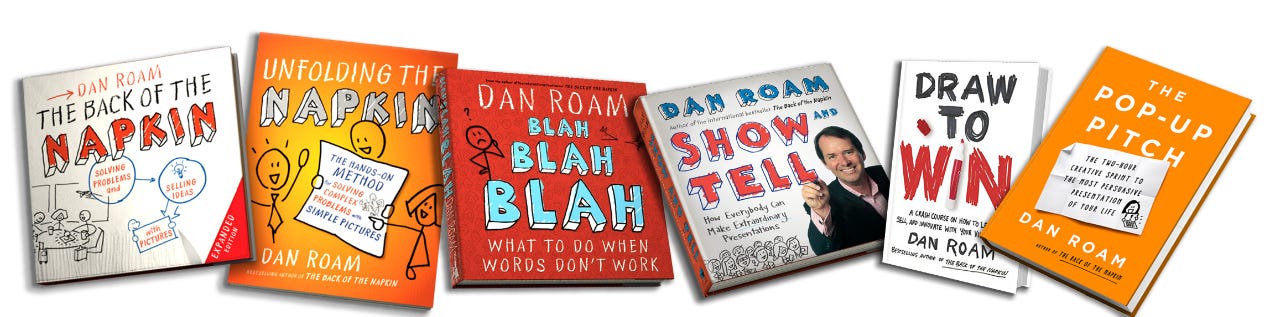
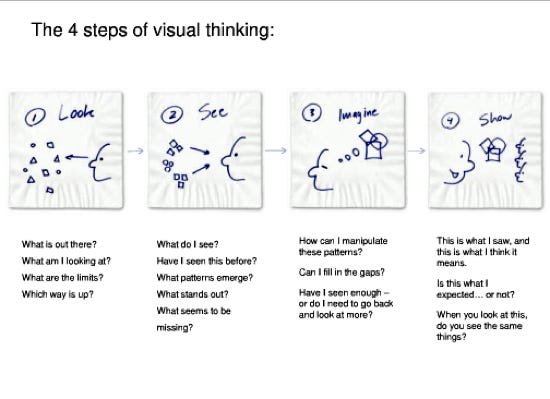
Dan Roam, in The Back of the Napkin, shows how anyone (yes, even “non-artists”) can use his Look–See–Imagine–Show process to go from messy idea to clear picture.
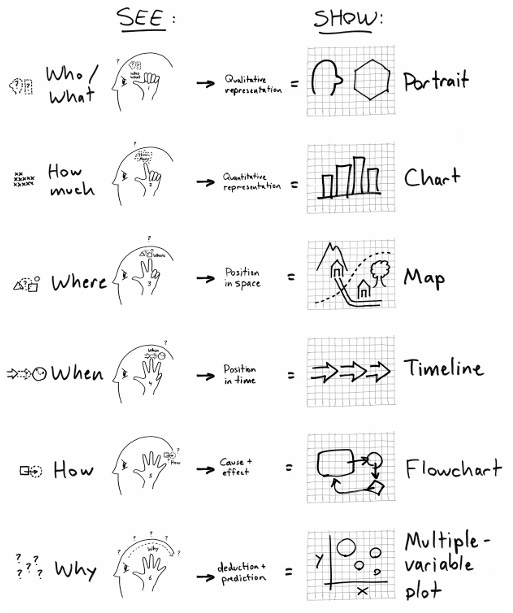
Dan’s work also covers what he calls the 6 Ways of Seeing, from who/what to when/where to how/why. This is a way to approach problems from multiple angles before sketching them out
From Paper to Pixels

Sometimes it’s not just about sketching-even the way you “lay out” your ideas can help clear your thinking.
While freehand sketching on flip-charts or sticky-notes on a whiteboard still work brilliantly, the good news is that for collaborative work, the digital visualisation and collaboration tools have never been more accessible.
Digital whiteboard platforms like Miro and Mural allow teams in different locations to map ideas in real time.
In fact, this approach to visual thinking is the core of the above 2013 TED Talk by Tom Wujec, one of Miro's founders. In his talk, he demonstrates how a deceptively simple process like drawing how to make toast can reveal hidden assumptions and a lack of alignment among people. By encouraging a collaborative, visual approach, teams can better understand complex problems and work together to solve them
Conclusion ∴💡 + ✍️ = ✨
This emphasis on visual thinking, whether on paper or on a digital canvas, is key to unlocking new perspectives and solutions. It's about getting everyone on the same page - literally.
Here’s your challenge for the week:
The next time you’re planning something - a presentation, a project, even a tricky conversation: Grab a sheet of paper or open a blank digital whiteboard and Draw it before you say it.
It doesn’t need to be pretty. It just needs to make your thinking visible.
Because the truth is, the clearer we can see our ideas, the easier it is to share them, stress-test them, and bring them to life.
.
.
.
.
.
Bonus Content
Visual Thinking Is More Than Just Sketches
For anyone interested in a deeper dive into the topic, Professor Judith Fan a Psychologist at Stanford studies how humans use physical representations of thought - drawings, models, gestures - to learn, communicate, and solve problems.
Her research shows that visualizing ideas isn’t just a communication trick; it deepens understanding for the creator and the audience. When we draw, we clarify our own thinking before we ask others to buy in.
The above video is a bit of a long watch (1hr+) but very interesting. Professor Fan discusses how humans use cognitive tools, such as drawing and data visualization, to transform abstract ideas into visual forms. She highlights the importance of these tools in accelerating learning, communication, and the advancement of human intelligence.
Gestalt Principles for Data Visualization
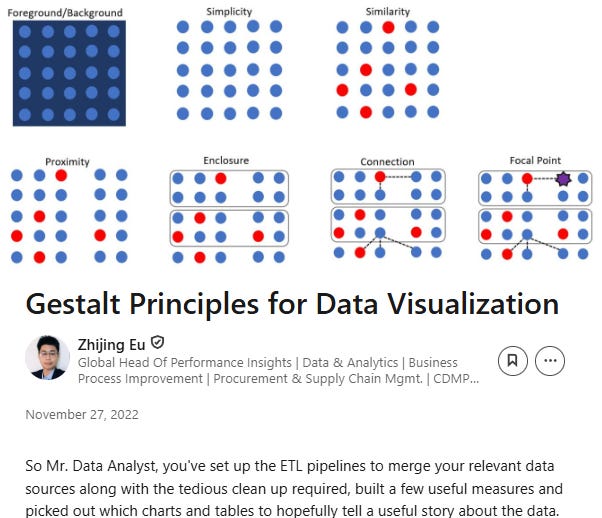
As an aside - I also write on Data, Digitalization and AI on my LinkedIn account and wanted to share a relevant article I wrote on Gestalt Principles, a set of guidelines from psychology relating to how we tend to process visual information including how we group similar elements, identify patterns and deal with complex images.
On the topic of making your thinking visible to spot patterns and connectione, polymath Iain McGilchrist shares his 'Nexus' method in this article :
"... externalizing ideas as cards on the table is classic cognitive offloading.
When we put our thoughts out into the world as flashcards, post-its or journal entries, we reduce our mental load.
Our working memory takes a break.This, in turn, allows our other faculties to kick in- namely, problem-solving, pattern recognition, and categorization.
Laying out the ideas as nexus points utilizes our brain’s remarkable talent for cognitive maps.
Whether you are conscious of the fact or not, your mind creates mental blueprints for how things relate to each other."
https://bigthink.com/mini-philosophy/the-nexus-method-how-to-make-the-most-of-what-you-learn